Watch a cat stroll past a full water bowl without a glance and you are watching ancient history. Cats are not careless about water, they are built to ignore it. That wiring served their ancestors well, and it works against them in a home where the air conditioning hums for most of the year. Here is why your cat barely drinks, and how the right fountain quietly rewrites the habit.
Blame the desert, not the cat
Domestic cats descend from the desert wildcats of North Africa and the Middle East, hunters that took most of their moisture from prey and rarely met open water. Evolution never gave them a strong thirst signal, because a mouse is roughly 70 per cent water and dinner counted as a drink. Your cat inherited that wiring unchanged: dry food gives her a fraction of that moisture, yet instinct whispers that she has had enough. She is not being stubborn. She is running desert software in an air-conditioned flat.
Small sips, big stakes
Mild, ongoing dehydration means concentrated urine, and concentrated urine gives crystals and irritation an easier time. Good hydration supports the kidneys and keeps the urinary tract gently flushed, which is why vets bring up water at almost every visit. None of this is a diagnosis: if your cat strains in the litter tray, visits it more often than usual, or suddenly drinks far more or less, see your vet before you shop for anything. For a healthy cat, though, more water is one of the kindest favours you can do her.
Moving water speaks fluent cat
Are water fountains good for cats? For most, yes, and the reason is instinct. In the wild, still water is the suspicious option: stagnant, warm and easy to contaminate. Running water reads as fresh, which is why so many cats paw at taps and ignore the bowl below. A fountain puts that instinct to work. Circulation keeps water aerated and cooler, the movement catches her eye from across the room, and the soft trickle is a standing invitation. If you worry a pump will hum through your evenings, a well-made fountain runs quietly enough to live beside your bed.
The still bowl problem, and what filters fix
A bowl of water starts ageing the moment you set it down. Dust, hair and stray kibble drift in, and within a day a slippery film forms on the sides, a layer your fingertips notice before your eyes do. If you stay with bowls, wash them daily in hot soapy water and pour fresh, never a top up.
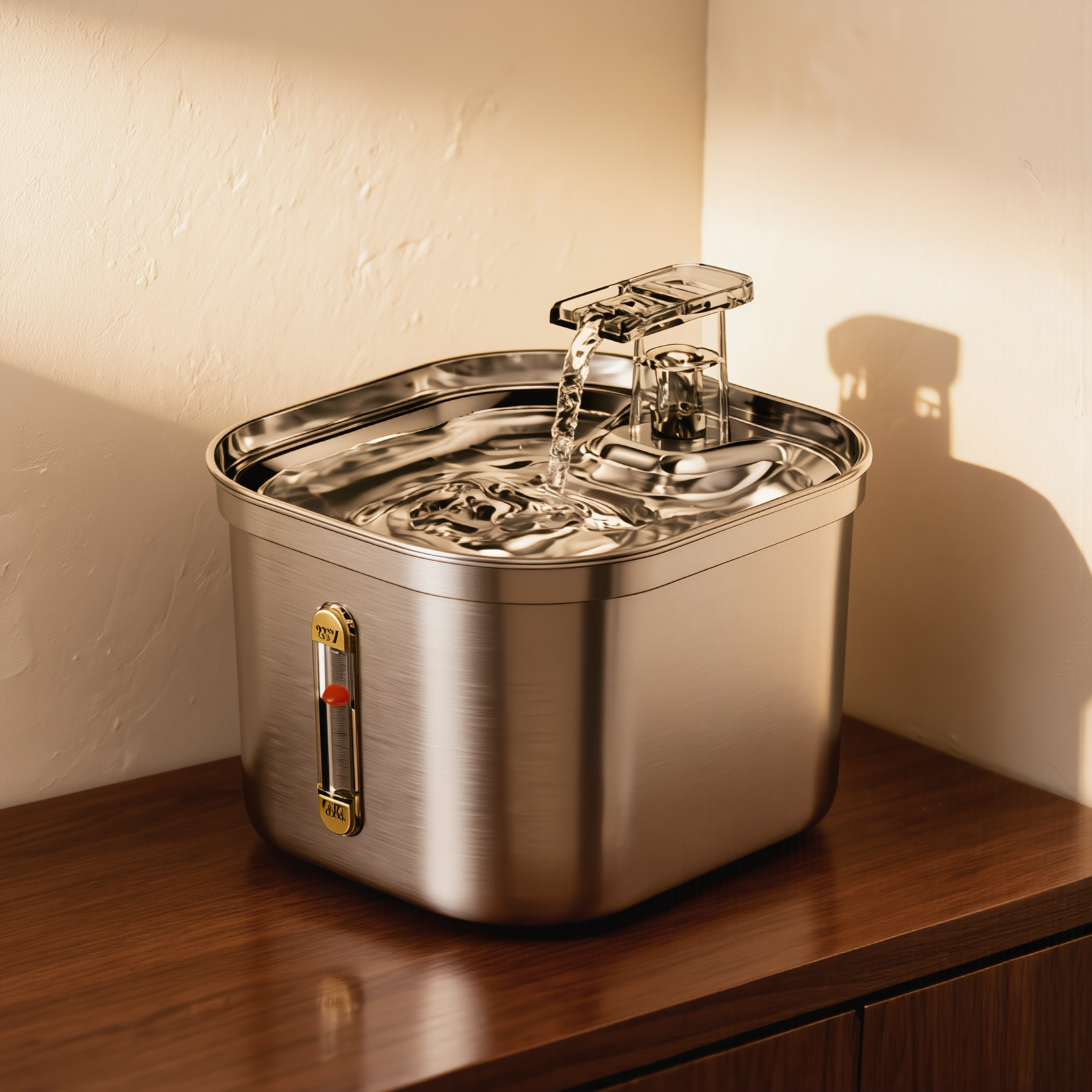
Fountains change the maths, and filters change it again. An unfiltered fountain keeps water moving but still needs frequent rinses. A filtered one, like the 2.2 litre stainless steel FELVO Brook, traps hair and debris and keeps water tasting clean between washes. Change the filter every two to four weeks and rinse the pump weekly.
Steel beats plastic, ask her chin
Plastic scratches, and scratches are where bacteria settle. Cats that drink from plastic day after day sometimes develop small black specks under the chin, a feline version of acne, and the gentle first fix most vets suggest is stainless steel or ceramic. Steel stays cooler, never holds yesterday's odour, and a wide, shallow drinking surface spares sensitive whiskers from pressing the sides. The stainless FELVO Brook takes this route for exactly these reasons, easy to keep properly clean and kind on close contact.
Water placement, daily amounts and the wet food assist
Cats prefer water away from food, an old instinct that treats anything near a kill as suspect, and many drink noticeably more once the two are separated. Keep it far from the litter tray too, in calm spots she passes anyway. A few useful numbers:
- A cat needs roughly 50 millilitres per kilogram of body weight daily, food moisture included: about 200 millilitres for a 4 kg cat, a small glass.
- Wet food is around 75 per cent water and does much of the work. A cat on dry food alone must drink far more at the bowl.
- Several small water stations beat one big one, especially in a multi-cat family.
Hydration in a UAE summer
Our summers add a twist: the heat lives outside, the dryness lives inside. Air conditioning runs for months and quietly dries the air, nudging everyone's water needs upward, cats included. Still water turns tepid within the hour and tepid is easy to refuse, while a circulating fountain stays cool and fresh through the long season. In larger homes and villas, set up more than one station: the cordless, rechargeable FELVO Anchor covers hallways and far corners without hunting for a socket, and its anti-tip base suits a family whose kitten treats water as a contact sport.
The short version
Cats inherited a faint thirst drive from their desert ancestors, so hydration needs engineering rather than hope. Offer some wet food, keep water away from food and litter, choose stainless steel over plastic, and let moving water do the persuading. In an air-conditioned UAE home a quiet, filtered fountain is the easiest health upgrade a cat can get, and the full range lives in our feeding and hydration collection.